Pay in installments of $7.16 with
 ,
,
 and
and

Shipping Estimate
USA
- USA
- CAN
- USA
- CAN
Ships within 48 hours · Estimated delivery Jul 2 - Jul 7
 Promo Codes Available:
For Your Every Summer RSVP, with Code: SUMMER15
Description
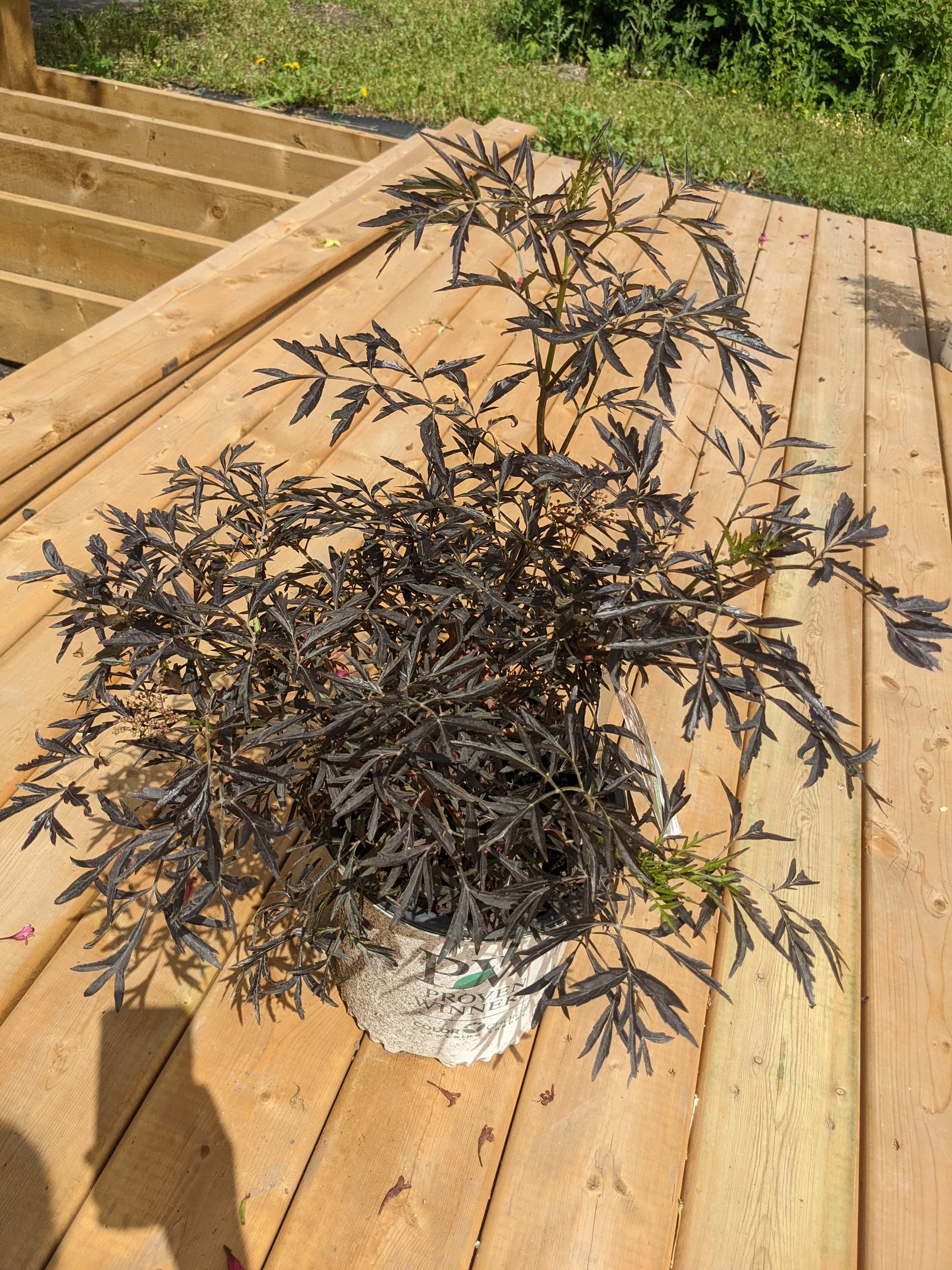
black lace plant in a pot Black Lace Elderberry – Riverdene Garden CentreSambucus nigra Black Lace Black Lace Elderberry is a stunning ornamental shrub with deep purple black, finely cut foliage that resembles a Japanese maple. It produces soft pink flowers in early summer, followed by dark purple berries in late summer if a pollinator elderberry is nearby. This cold hardy (Zone 4 7), fast growing, deer resistant, and low maintenance shrub is perfect for borders, specimen plantings, hedges, and wildlife gardens in
Sambucus nigra ‘Black Lace’
Black Lace® Elderberry is a stunning ornamental shrub with deep purple-black, finely cut foliage that resembles a Japanese maple. It produces soft pink flowers in early summer, followed by dark purple berries in late summer if a pollinator elderberry is nearby. This cold-hardy (Zone 4-7), fast-growing, deer-resistant, and low-maintenance shrub is perfect for borders, specimen plantings, hedges, and wildlife gardens in Southwest Saskatchewan.
Planting & Location
- Hardiness Zone: 4-7 (may need winter protection in colder Zone 3 areas)
- Mature Size: 6-8 feet tall, 6-8 feet wide
- Growth Rate: Fast (up to 24 inches per year)
- Sunlight Needs: Full sun to partial shade (best foliage color in 6+ hours of sun)
-
Soil Preference:
- Prefers moist, well-drained, loamy soil.
- Tolerates clay, sandy, and slightly acidic soils.
- Avoid standing water—elderberries dislike wet feet.
- Spacing: 6-8 feet apart for mass planting, 8+ feet apart for individual shrubs.
Watering
- Young Plants (First Year): Water deeply 1-2 times per week to establish roots.
- Established Shrubs: Water weekly during dry periods, but plants can tolerate short droughts.
- Avoid Overwatering: Prefers moderate soil moisture but must have good drainage.
Fertilizing
- First Year: No fertilizer needed—focus on root establishment.
-
Mature Shrubs:
- Apply a balanced slow-release fertilizer (e.g., 10-10-10) in early spring to encourage healthy growth.
- Organic alternative: Compost or well-rotted manure in spring.
Pruning & Maintenance
- Best Time to Prune: Late winter to early spring, before new growth starts.
-
How to Prune:
- Remove dead, damaged, or weak branches to promote fresh, healthy growth.
- Cut back by one-third in early spring to maintain shape and encourage bushiness.
- Older shrubs can be rejuvenated by cutting back to 12 inches above the ground every few years.
Flowers, Berries & Pollination
- Bloom Time: Late spring to early summer (May-June)
- Flower Color: Soft pink clusters contrast beautifully with dark foliage
- Berry Production: Dark purple berries appear in late summer but require a second elderberry variety nearby for pollination (e.g., Sambucus nigra ‘Instant Karma’ or ‘Black Beauty’).
- Attracts: Pollinators (bees, butterflies) and birds
Note: Berries are edible when fully ripe but should be cooked before consumption. Raw berries may cause stomach discomfort.
Pest & Disease Management
Resistant to: Deer, drought, and urban pollution
Common Pests:
-
Aphids – May cause curled leaves and sticky honeydew.
- Solution: Spray with insecticidal soap or introduce ladybugs.
-
Spider Mites – Can cause leaf discoloration in dry conditions.
- Solution: Hose off with water or use insecticidal soap.
Common Diseases:
-
Powdery Mildew – White fungal coating on leaves.
- Solution: Improve airflow and apply fungicide if needed.
-
Leaf Spot (Fungal or Bacterial) – Causes brown spots on foliage.
- Solution: Avoid overhead watering and remove infected leaves.
Winter Protection
- Hardy in Zone 4, but in Zone 3 areas, mulch around the base (2-4 inches) for extra insulation.
- If heavy snowfall is common, avoid planting in high-exposure areas where branches could break.
- Rodent Protection: Use tree guards if small animals are a concern in winter.
Landscape Uses
Great for borders, mixed plantings, and specimen plantings
Striking dark foliage provides season-long interest
Deer-resistant and pollinator-friendly
Can be pruned into a hedge or left in a natural shape
Berries can be used for jams, syrups, and wine (if properly cooked)
Additional Notes:
- Black Lace® Elderberry is one of the most visually striking elderberries, offering deep purple foliage similar to a Japanese maple with pink flowers and ornamental berries.
- Lifespan: 20+ years with proper care.
- Works well in modern landscapes, cottage gardens, or as a hedge.
Photo courtesy of Proven Winners
Shipping Notes
- Free Standard Shipping on $100+ Orders to the USA.
- Except Preorder products are shipped in 48 hours.
- Delivery to the USA:
- Standard Shipping : 3-10 business days
- If time is of the essence, please consider selecting expedited delivery for faster service.
Exchange/Return Notes
- We offer a 30-day return/exchange service after receiving.
- Final sale items are not eligible for returns or exchanges.
- To process your return/exchange, please contact us at [email protected]
- Please click here for more details>>> Return & Exchange Policy